Overview
- Student drivers need a vehicle that can support school days, errands, family use, and weekend plans without making daily travel feel complicated. Chevrolet Captiva EV/PHEV gives young buyers two electrified options with different strengths.
- The Captiva EV offers a fully electric drive for students who have regular charging access and mostly city-based routes. The Captiva Plug-In, officially the Captiva PHEV, adds fuel-powered support for students who need longer range and more flexibility.
Rising fuel costs, heavy traffic, and unpredictable travel conditions continue to shape how drivers choose their vehicles in the Philippines.
For many, the challenge is finding a vehicle that balances efficiency with flexibility, especially for daily city driving and occasional long-distance trips. Emerging car models such as electrified SUVs and hybrid systems are now offering alternatives that address these changing needs.
In this article, we’ll take a closer look at the Chevrolet Captiva EV vs Plug-In Hybrid (PHEV) and how each variant differs in terms of power system, range, and everyday usability.
Chevrolet Captiva EV vs Plug-In: Key Differences to Know
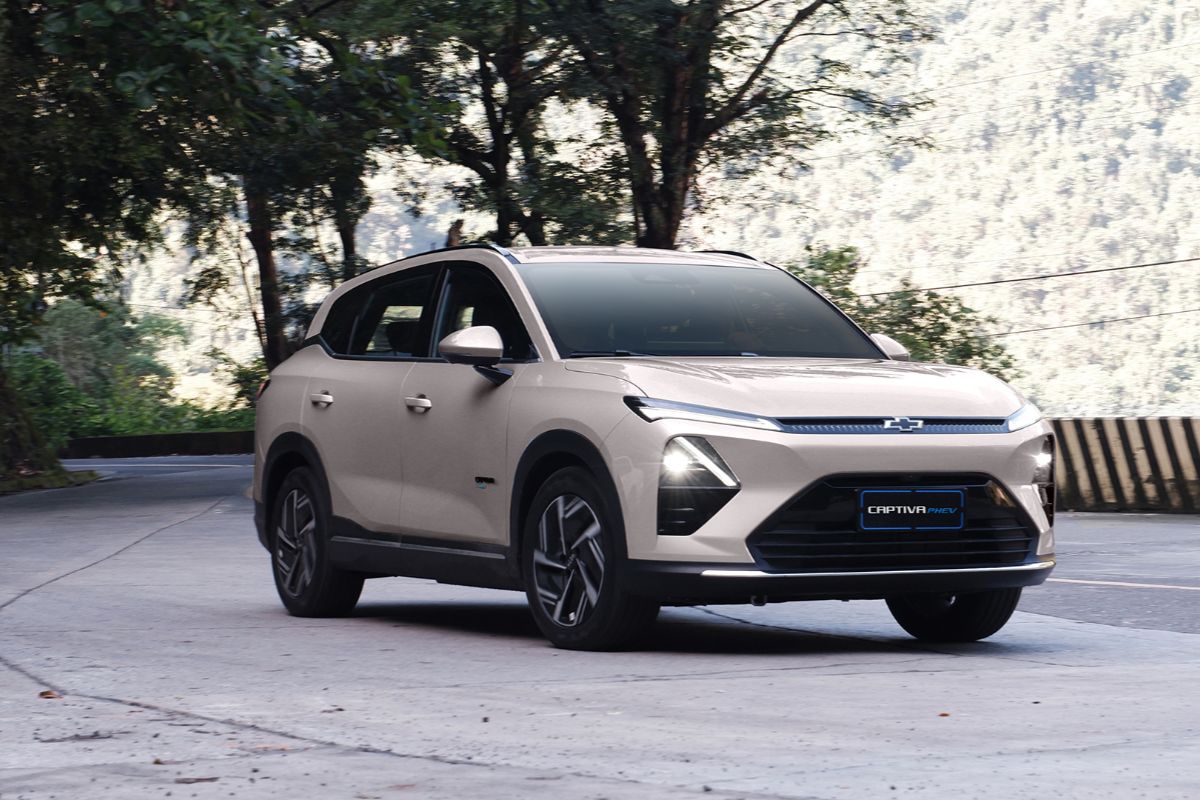
At Chevrolet, we understand that students and young buyers need a vehicle that fits more than one routine. Your car may be used for school, errands, family trips, weekend drives, and daily city traffic.
The Captiva EV and Captiva Plug-In both support modern electrified driving. The main difference is that the EV runs fully on electric power, while the Plug-In combines electric driving with a gasoline engine.
Chevrolet Captiva EV
The Captiva EV is Chevrolet’s answer to city driving: fully electric, with no engine noise, no fuel stops, and no gear changes to manage. It runs on a permanent magnet synchronous motor producing 150 kW or 204 PS and 310 Nm of torque, paired with a 60 kWh lithium iron phosphate battery and up to 415 km of NEDC range.
Once you’re behind the wheel, the shift from a fuel-powered car is immediate. The fully electric drivetrain delivers instant torque from a standstill, making city stop-and-go traffic smoother and less fatiguing. No fuel stops, no engine noise at idle, no cold-start delays. Just a quieter, more focused drive.
Chevrolet Captiva Plug-In
The Captiva PHEV is Chevrolet’s option for drivers whose week doesn’t follow a fixed pattern: electric power for daily use, with a fuel engine ready when the route demands more. It pairs a 20.5 kWh lithium iron phosphate battery with a 53L fuel tank, giving our PHEV up to 1,040 km of total NEDC range.
If your schedule includes provincial trips, family sharing, or routes that go well beyond city limits, this range gives you a meaningful buffer. The PHEV runs on electric power for shorter weekday trips, then draws on the fuel engine when the route demands more, without requiring you to plan around charging availability.
This makes the Captiva PHEV a strong option if your driving week is harder to predict.
Quick Comparison
| Category | Captiva EV | Captiva Plug-In / PHEV |
|---|---|---|
| Power Source | Fully electric | Plug-in hybrid with electric and fuel support |
| Battery | 60 kWh LFP battery | 20.5 kWh LFP battery plus 53L fuel tank |
| Range | Up to 415 km NEDC | Up to 1,040 km total NEDC range |
| Charging | CCS2, AC and DC charging | CCS2, AC and DC charging |
| Listed Price | PHP 1,938,000 | PHP 1,899,000 |
| Best Fit | Predictable city routines with charging access | Mixed routes, longer trips, or less predictable schedules |
Power Source and Driving Feel
The main difference between both Captiva variants lies in how they deliver power. The Captiva EV runs entirely on electric energy, giving it a quieter and more direct driving feel that suits city-based routines.
The Captiva Plug-In, on the other hand, can switch between electric and gasoline power depending on driving conditions, allowing it to handle both short daily trips and longer drives with flexibility. For you, this means the EV feels more consistent if your routine is predictable, while the PHEV gives more room for changing travel needs.
Range and Charging
The Captiva EV offers up to 415 km of driving range, while the Captiva PHEV extends up to 1,040 km by combining electric and fuel power.
Both variants support AC and DC charging through CCS2, with fast charging available for the EV to reduce waiting time. What this means for you is simple: the EV suits regular charging habits, while the PHEV reduces dependence on charging access when your schedule is less predictable.
Space, Cabin, and Safety Features

Both Captiva variants share the same SUV platform, offering a stable and practical size for everyday use. The cabin is designed to accommodate daily essentials such as school items, travel bags, and personal cargo, with flexible storage depending on seat configuration.
Inside, both models include a large infotainment display, smartphone connectivity, a digital driver cluster, and comfort-focused features such as a panoramic sunroof and USB ports. Safety is supported through multiple airbags, a 360-degree camera, ISOFIX anchors, and driver assistance systems designed to help in everyday road conditions.
Price and Lifestyle Fit
The Captiva EV is priced at PHP 1,938,000, while the Captiva PHEV is priced slightly lower at PHP 1,899,000, making the difference minimal. This places the focus less on cost and more on how each vehicle fits your lifestyle.
If your routine is mostly within the city and charging is accessible, the EV aligns well with your needs. If your driving involves longer distances or less predictable schedules, the PHEV offers more flexibility.
Final Thoughts for Student Drivers
For students, the decision between the Captiva EV and Captiva Plug-In comes down to how your daily driving looks in practice.
The EV works best for consistent city routines, while the PHEV provides added flexibility for changing travel demands. Both options support electrified driving, but they serve different usage patterns rather than one being universally better.
Key Takeaway
The Chevrolet Captiva EV vs Plug-In comparison shows two different ways to approach electrified driving and with a better understanding of both, you can now make a more informed decision based on how your daily routines, travel needs, and charging access align with each option.
Explore the Chevrolet Captiva EV/PHEV on the official Chevrolet Philippines website. You can also find a Chevrolet dealer or book a test drive to compare both variants in person.